



When Space Robots Learn to Spar
Somewhere in a Houston lab, a robotic arm just learned a left hook the hard way. It failed thirty thousand times before it figured out how to stop overcorrecting. Engineers called it progress. Fighters would call it Tuesday.
The truth is that NASA’s new wave of training algorithms look a lot like combat drills. The Dexter-2 robotic manipulator, currently part of the space agency’s autonomous servicing research, learns the way a fighter does: by doing something wrong, adjusting, and trying again until the motion feels natural. It does not memorize steps. It learns rhythm.
That rhythm is what connects two worlds that rarely meet. Reinforcement learning, the core method behind most modern robotics, is a process of feedback, fatigue, and fine-tuning. In the gym, fighters shadowbox to refine their timing under stress. In orbit, robots repeat simulated docking maneuvers until they stop crashing virtual satellites. Both are perfecting motion under pressure.
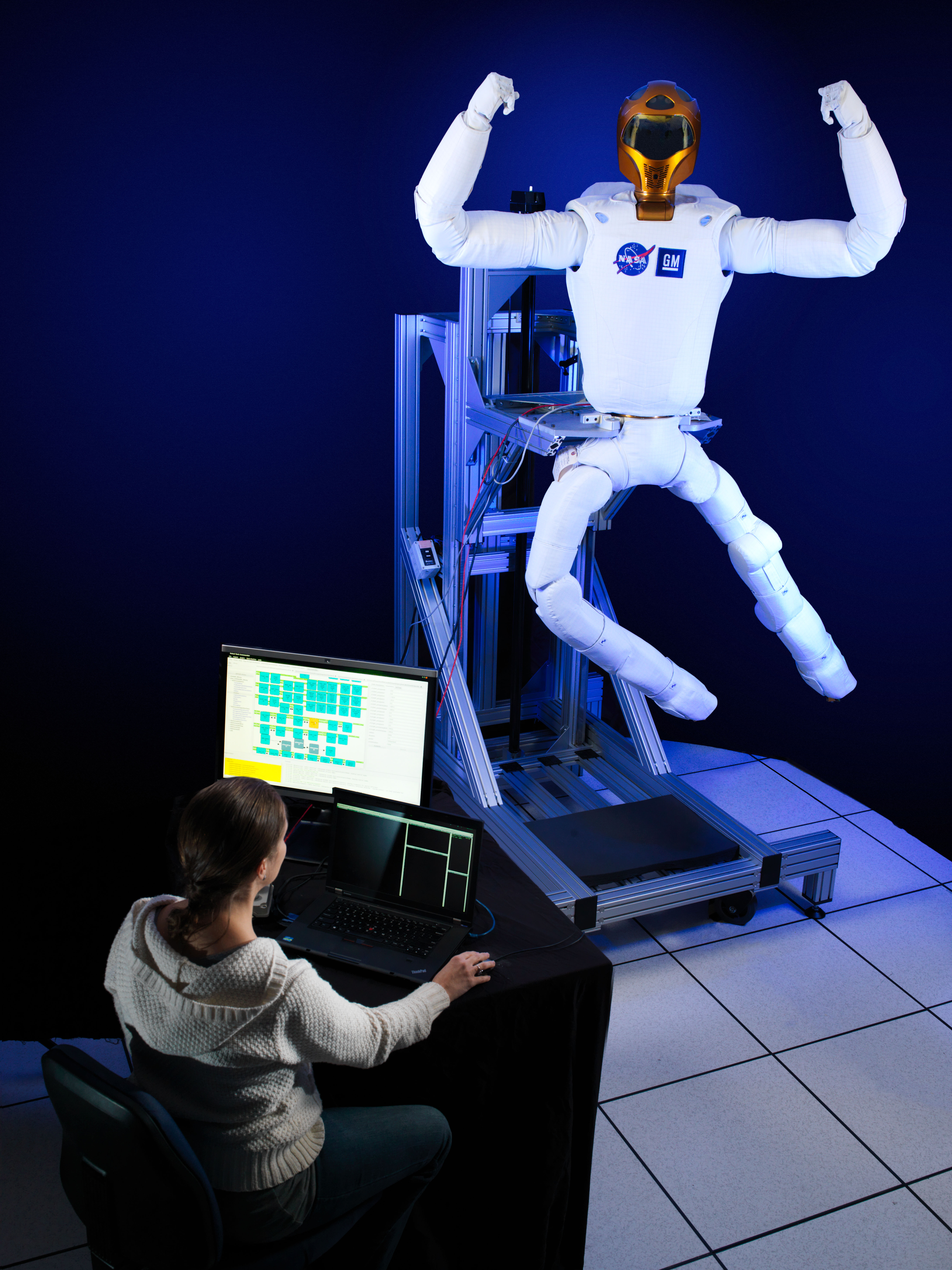
Robonaut during dexterity training at NASA’s Johnson Space Center. Like a fighter, it learns through repetition. Image credit: NASA / JSC
NASA’s robotics teams have been testing adaptive neural models that allow machines to handle uncertainty, like unplanned torque or changing lighting during docking. Those systems borrow from the same computational strategies used by sports-performance AI firms that analyze fight footage to predict reaction timing. The idea is simple: turn repetition into intelligence.
At the UFC Performance Institute, researchers have been experimenting with machine learning tools that map strike trajectories and decision chains. The system identifies how quickly a fighter reads distance, when they flinch, and when fatigue starts to alter mechanics. In principle, it is the same thing Dexter-2 does in a sterile lab in Houston. It is not about brute force. It is about building an internal sense of timing.

Athletes at the UFC Performance Institute, where biomechanics and data feedback loops drive performance. Image credit: UFC / Zuffa LLC
The parallels go deeper than programming. In both domains, learning comes from controlled failure. Astronauts train for months in analog habitats to simulate disorientation and equipment errors. Fighters drill through rounds of exhaustion to keep composure when their body starts to panic. Both are learning how to make clear decisions in chaos.
Even the data language overlaps. Engineers talk about reward functions. Coaches talk about positive feedback loops. Both are describing the same feedback principle that turns repetition into instinct.
NASA’s robotics engineers admit that their machines are still far from human-level adaptability. A robotic arm can adjust to torque variance, but it cannot yet improvise when something completely unexpected happens. That, for now, remains a human specialty. But the line is narrowing. Each new iteration makes the machine a little more reactive, a little more alive in the way it learns from struggle.
If you walk into an MMA gym and a NASA lab in the same week, the sounds are not all that different. Repetition. Correction. Small successes stacked over failure. Whether it is a hook landing on a pad or a robotic hand finding its target orbit, progress sounds like impact followed by silence, and then another try.
Both astronauts and fighters train for environments where mistakes can end careers. Both rely on instinct that comes only from thousands of failed attempts. Both treat the act of learning as survival.
And maybe that is the real link between orbit and octagon. It is not about strength or speed or hardware. It is about learning to fail in a way that teaches precision. Every jab and every robotic adjustment is another reminder that improvement does not come from success. It comes from the data bruises.


Comments
Post a Comment